

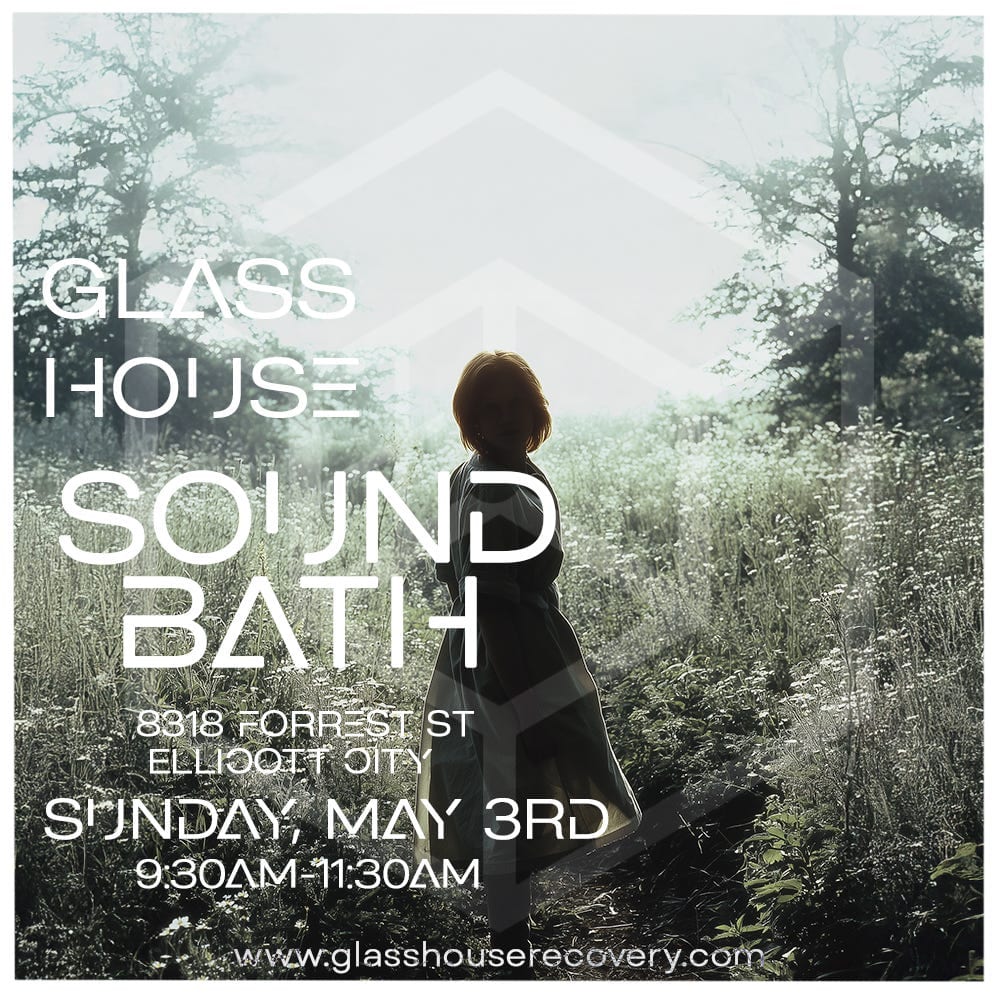
On Sunday, May 3rd, from 9:30 to 11:30am, Glass House is opening its doors to the public for a meditation and sound bath. This is not a wellness trend we’re chasing. It’s a promise we made to some monks who walked here from Texas, and we intend to keep it.
Sign up here: Glass House Sound Bath | EventBrite
**From Texas to Annapolis on Foot
**
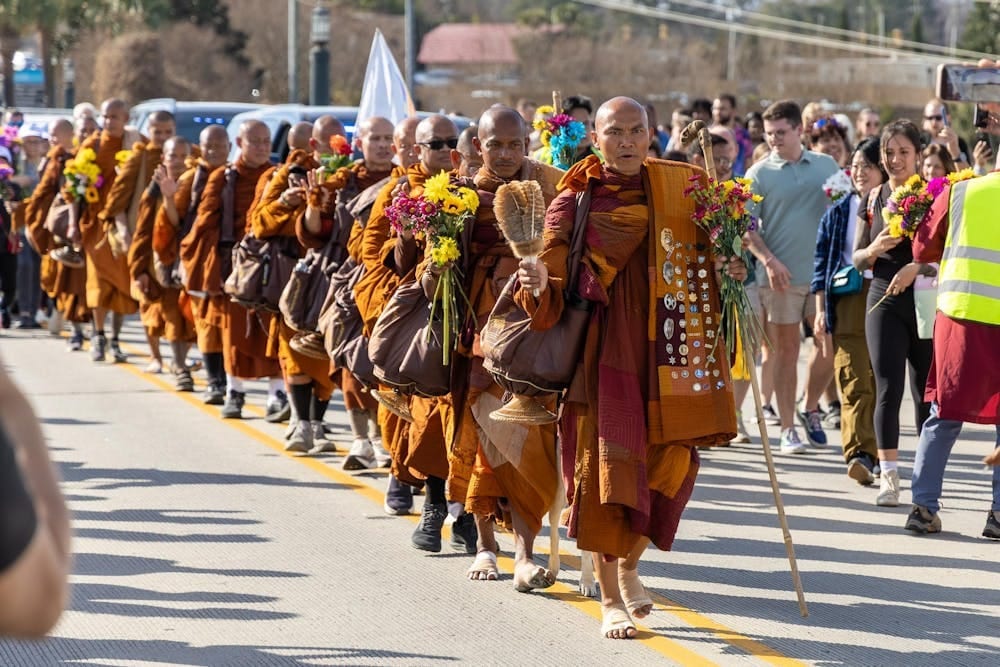
A few weeks ago, we went to Annapolis to meet a group of Buddhist monks who had just completed a Walk for Peace — Texas to Maryland, 2,000-plus miles, on foot. Through cold snaps, long stretches of open highway, and the full indifference of American traffic, they walked. Every single day. To spread one message: peace is a practice, not a posture. It’s something you build in your body over time, not something you stumble into after a good weekend.
We sat with them and listened. They talked about the walk with this kind of quiet authority that you only earn by actually doing hard things. No performance, no elevator pitch. Just clarity.
Before we left, they asked if Glass House would be willing to make a place where these teachings could continue in real life — among real people who are still in the middle of their struggle, not safely removed from it. We said yes without hesitation. Because this is exactly the kind of work we were built to do.
Why This Matters Here
Glass House has always believed that recovery is bigger than stopping a behavior. It is the active, ongoing construction of a life that can hold reality without flinching — a life with enough interior space to actually feel things without immediately needing to escape them.
Buddhist meditation is one of the most rigorously tested tools in human history for building exactly that kind of interior space. It trains attention. It builds tolerance for discomfort. It teaches you to watch your own mind the way you’d watch a fire — close enough to understand it, grounded enough not to get consumed by it. For anyone navigating addiction, grief, anxiety, or the general chaos of being alive right now, that is not a luxury. That is essential equipment.
We accepted the monks’ invitation because these practices belong in spaces like ours — places where people are in the hard middle of transformation, not just the tidy beginning or the photogenic end.
Let’s Be Honest About Meditating
Here is something nobody tells you upfront: meditation is awkward. You’re going to sit down, close your eyes, and immediately remember seventeen things you forgot to do, fully relive an embarrassing thing you said in 2014, and develop an inexplicable itch directly in the center of your back.
Your mind will not go quiet. It will get louder. It will narrate the experience of meditating while you are trying to meditate. It will ask whether you’re doing it right. It will answer its own question. You will realize you’ve been planning lunch for the past four minutes and have to start over.
This is not failure. This is what the practice actually is. You notice you’re gone, and you come back. You notice you’re gone, and you come back. You do this a hundred times in thirty minutes and you walk out a little more wired for self-awareness than when you walked in. It is one of the more humbling and honest things a person can do.
You don’t have to be good at it. You just have to show up and let it be difficult. The monks would tell you the same thing.
The Instruments
Alongside the meditation, we’re running a full sound bath — and this one is built from tools we care deeply about.
We’re bringing modular synths capable of generating evolving, living soundscapes that respond and shift in real time. We’re bringing organic instruments — strings, resonant bodies, breath — that add texture and warmth. And we’re bringing a polyphonic Moog that can fill a room with layered tones so deep and rich it feels less like listening to music and more like being slowly submerged in it.
These instruments do something talk cannot always do. They move sound through the body before the mind can intercept it. They create a sustained environment where the usual noise — the phone, the to-do list, the low-grade hum of anxiety we’ve all normalized — loses its grip. The technology is contemporary, but the intention is ancient: help people find their way back to stillness, even briefly, even imperfectly.
Especially imperfectly.
Sunday, May 3rd. 9:30am–11:30am.
Here’s who this morning is for: anyone who has ever felt stretched thin by their own life. Anyone who has ever picked up their phone seventeen times in an hour without knowing why. Anyone who has lost someone, is in recovery, is supporting someone in recovery, or is simply curious what happens when you stop moving for two hours and let sound do some of the work.
You do not need a meditation practice. You do not need a spiritual framework. You don’t even need to be a morning person, though coffee will presumably be available because we are not monsters.
You need thirty square feet of floor space, a willingness to lie down, and the very modest courage it takes to sit with your own mind for a while — knowing it’s going to wander, knowing that’s the whole point, and showing up anyway.
The monks walked over two thousand miles to remind us that peace requires that kind of repetitive, unglamorous commitment. May 3rd is your chance to try it out for two hours.
We’ll handle the sound. You handle the showing up.
Stay in touch.