
Shadowboxing.
Glass House continues its deep dive into the world of Carl Jung
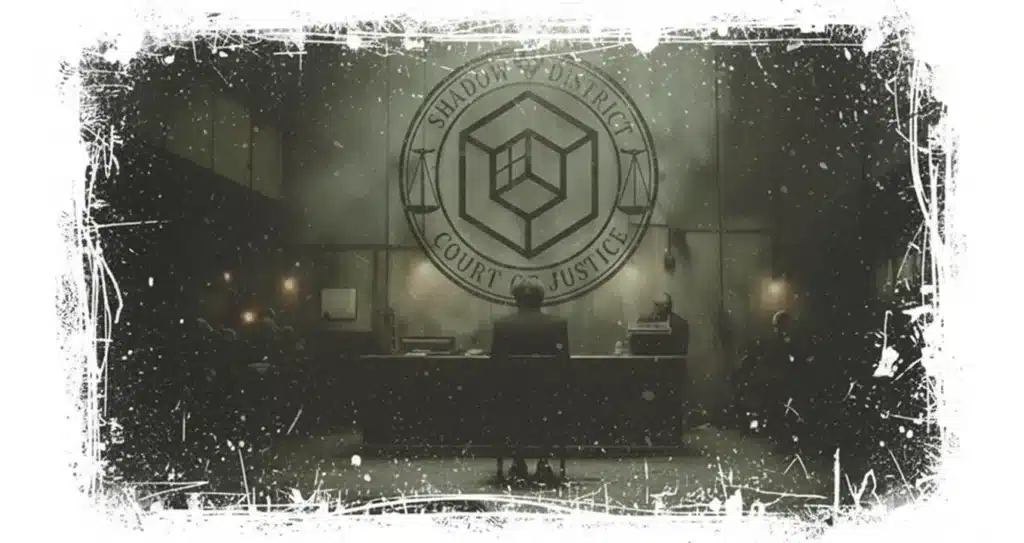
Shadow District Court
There is a voice inside many of us that never seems to rest. It’s not loud, but it’s persistent—building cases against us day after day, feeding on shame, guilt, fear, and contradiction. It speaks in absolutes. It distorts memory. It knows how to twist the facts. And worst of all, we often believe it.
It’s weird how dedicated that voice seems to be, right?
Relentlessly selling us a future that puts us a galaxy away from love, eternally broken, and fully believing in all the good that we will never be.
It’s convincing.
It’s captivating.
And sometimes it even has evidence….
It’s almost like a Prosecutor.

ALL RISE.
Enter the Shadow District Court—a fully immersive therapeutic process in which patients place the most toxic parts of their internal dialogue on trial. The exercise draws from depth psychology, courtroom structure, and lived experience. It asks each patient to identify the specific accusations they’ve lived under and step fully into the role of their own defense.
In a previous module, we used battle rap to explore how weaponized language exposes the stories we tell ourselves. This takes it a step further. In Shadow District Court, the narrative doesn’t just show up—it presses charges. The disease builds its case. And the patient steps up as their own defense.
Preparation began with patients identifying the negative narratives that quietly shape their inner world—longstanding accusations like “You’re too much” or “You always ruin good things.” These statements were written down, studied like courtroom transcripts, and traced back to their origins.
From there, each patient built a profile of their inner prosecutor, complete with a name, tone, posture, and imagined backstory—often modeled after a parent, critic, or warped version of self. Once personified, this voice could be examined rather than obeyed.
To bring the experience fully to life, we actually built a complete courtroom on the new second floor at Glass House. Gavel, witness stand, defense table—everything. Each patient stepped into the role of their own defense attorney, tasked with building a case against the voice that had lived in their head unchecked for years.

The result wasn’t just symbolic. It was transformational. By casting the shadow—the disease, the old narrative—as the prosecuting attorney, and stepping into the role of their own defense, patients confronted the voice that had shaped their self-worth for years. For many, it became clear—perhaps for the first time—that the charges didn’t hold up. And more importantly, they no longer had to live with it’s indictment.
Court adjourned.
PERSONIFYING THE COMPLEX
A complex is a collection of emotionally charged perceptions, somatic responses, memories, ideas, autonomous associations, and images clustered around an archetype or theme. A complex can cause a disruption to the ego by autonomously expressing its psychic energy. It can wash over us without warning, causing shifts that we may be unaware of—but which could be obvious to others. Our ego might compete for psychic energy, reject the complex because it does not align with its agenda, and push it back down into the unconscious (shadow), where it will continue to—unbeknownst to us—exert control.
This may seem pretty dark, but a complex can challenge the dominant position of the ego and serve as a catalyst for positive (or negative) change. Whether it is helpful or not depends on our ego’s ability to accept it into consciousness and integrate it into our personality as a facilitator of individuation.

You could blame yourself or others for the complex. Or you can become conscious of it and claim your own authority. Jung believed that entering into the suffering with the complex was the solution to healing—and the path to individuation. If we are willing to do the work to get to know our complexes, then the psyche will start to move toward the solution.
“It is like a homeopathic cure where the antidote is the poison. First we feel the poison of the complex, then we discover the hidden tincture that begins to heal the psyche.”
To begin the process of identifying and getting to know our complexes, patients were invited to create small images in the style of tarot cards. Why create an image of the complex? Because once you do that, you personify it—and once you personify something, you can have a relationship with it. Any materials can be used: collage, paint, mixed media. Patients are encouraged to make several, as this will demonstrate how our complexes are constellated together.
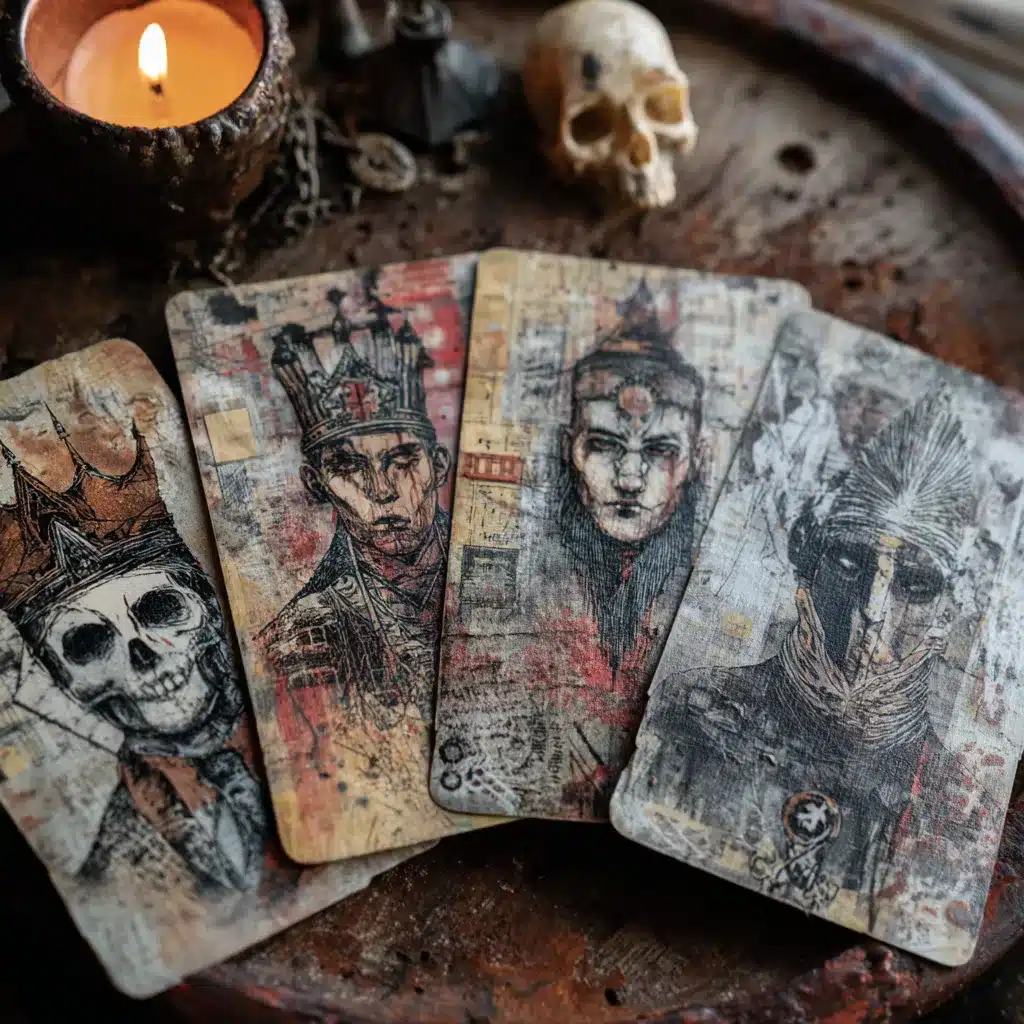
Complexes limit the choices of behavior we have when we are under their influence. They distort our perception of reality. But if we can become aware that we are experiencing a complex in the moment, then we can also know that there is a different reality—and that it won’t last forever. The goal isn’t necessarily to get rid of complexes, but to recover from them quicker.
By making images, spending time with them, and having conversations with them, patients can begin to familiarize themselves with their complexes and have something to attach meaning to.
THE HERO’S JOURNEY: CONTINUED
In our last newsletter, we introduced the Hero’s Journey as a mythic mirror for recovery—offering patients a deeper lens to view struggle, growth, and transformation. This month, we expanded the work by exploring what it means to cross the threshold and recognize the presence of supernatural aid and mentorship.
CROSSING THE THRESHOLD
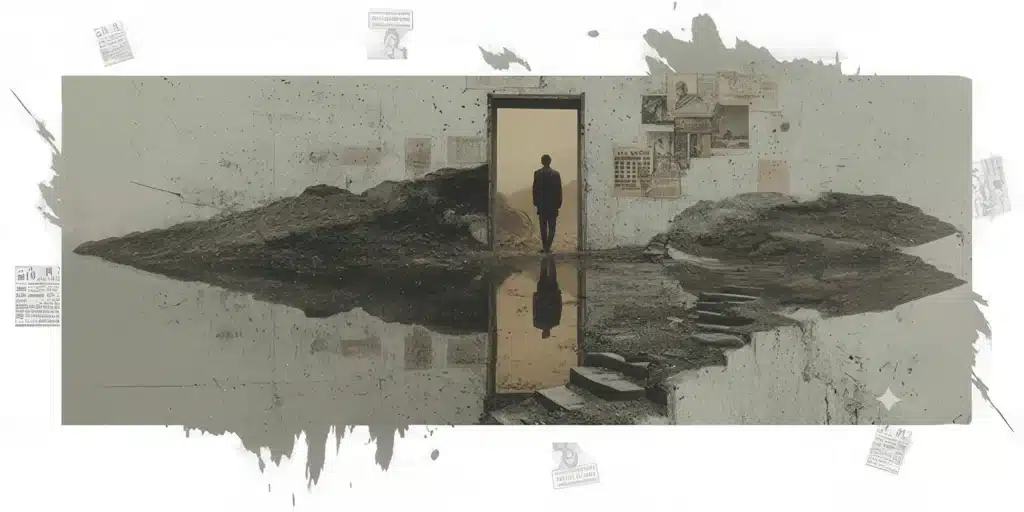
In mythology, the threshold is where the hero leaves the known world behind—stepping into unfamiliar territory where transformation becomes possible. In recovery, it’s just as real. It might look like staying present in discomfort, speaking truth for the first time, or choosing not to run from fear.
At Glass House, we see patients reach this moment in powerful, personal ways: revealing long-held shame, dropping performance in group, or realizing their story isn’t over just because they feel broken. Crossing the threshold means surrendering to the unknown, trusting that the path ahead—though hard—is worth it.
This moment doesn’t promise relief, but it does offer meaning. And meaning always requires sacrifice. To step forward, something must be left behind—an identity rooted in pain, a survival pattern, or an outdated belief.
But once the threshold is crossed, the landscape begins to change. New allies appear. The map starts to form. The inner world reorganizes—not instantly, but inevitably.

MEETING THE MENTOR & SUPERNATURAL AID
After crossing the threshold, the hero is met with guidance—often from a mentor or unseen force. It’s supernatural aid, arriving right on time. In our space, that help shows up in many forms: a therapist’s words, a breakthrough in group, a complex card image, or an inner whisper: “You don’t have to live this way anymore.”
The challenge isn’t whether aid exists. It’s whether we’re present enough to recognize it. Are we in the room, awake enough to hear it?
Patients often wrestle with these archetypal questions—wondering if they’re worthy, or if they’ve missed their chance. We remind them: the threshold is always waiting. The mentor always appears. But we have to be honest and open enough to receive it.

These themes stretch the imagination and demand reflection. But those who lean in are learning that mythology isn’t fantasy—it’s a blueprint of the psyche. And once we stop asking “Is this real?” and start asking “Am I ready?”—the story begins to unfold.